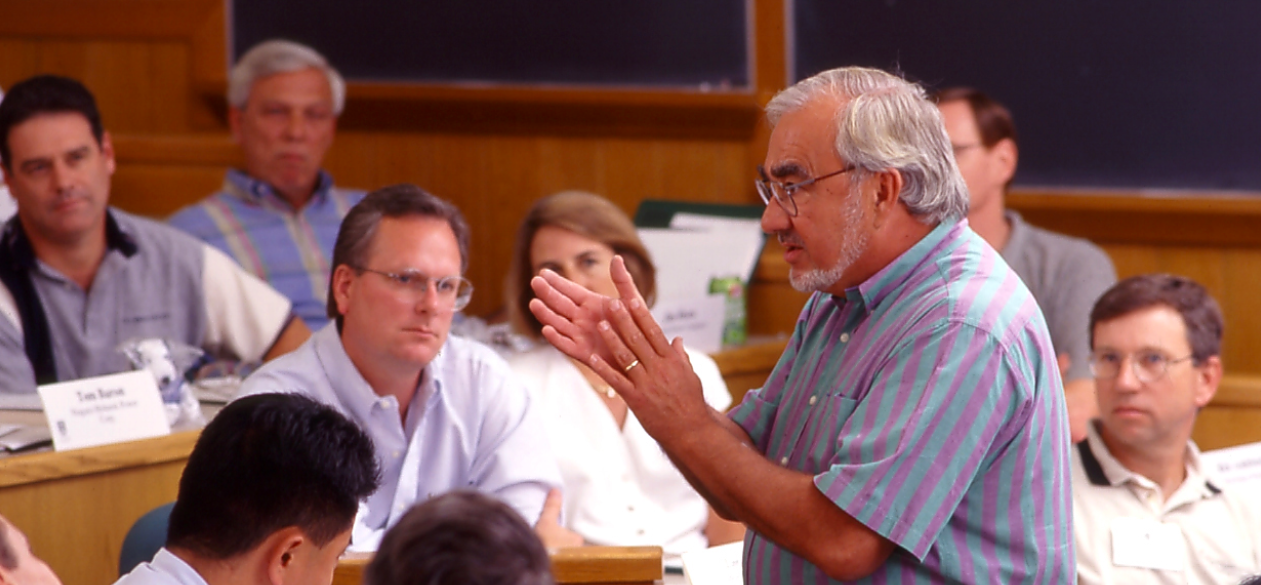
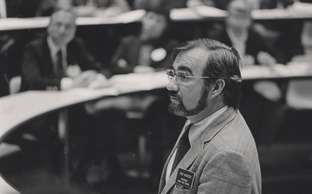
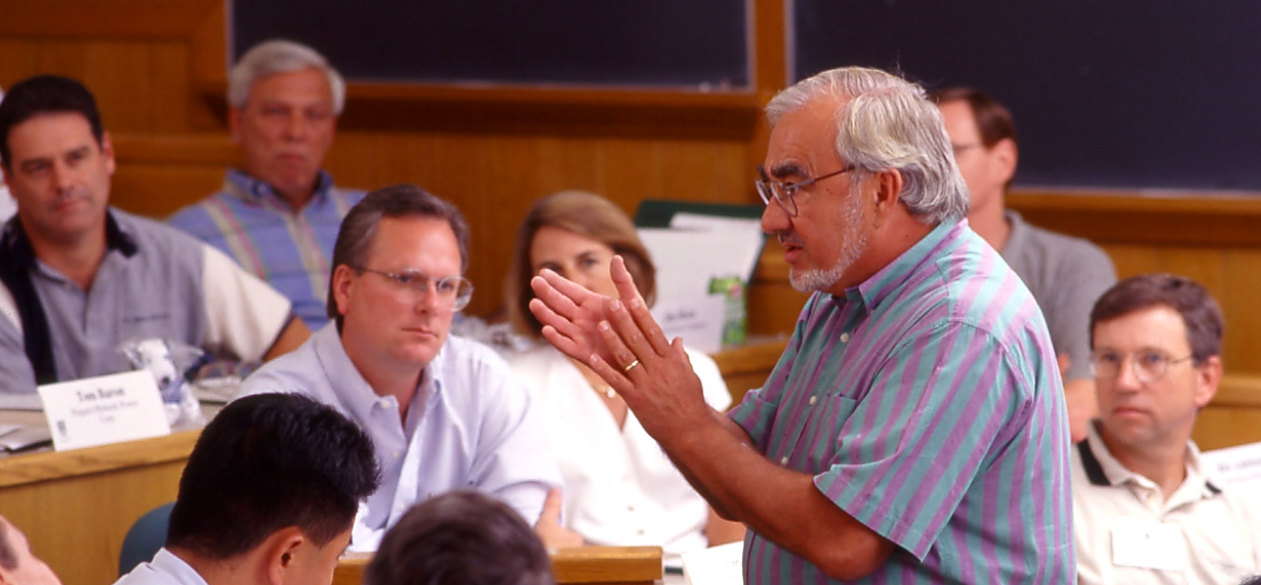
 Photo:Tuck Communications, 5-31-22 Some people have a rare aura around them. It's an aura or a glow that something is going to be different because this person is in the room. Or it's that something is going to be different because this person is in charge, or at the podium, or even at dinner with you. Fred Webster had this aura. Some people saw it when he was a marketing professor. Some saw it when he was the Executive Director for the Marketing Science Institute (MSI). Some saw it when he started the Tuck Summer Marketing Executive Program, or when he was a volunteer fireman Etna, NH. Others even saw it when he was sitting across from them at a recruiting dinner. I think he had this aura around him all the time. There's a great story that during WWII, Winston Churchill was attending one of Franklin Roosevelt's White House cabinet meetings in Washington DC. He was seated off to the side of the large cabinet table where all FDR and all of the cabinet Secretaries were seated. Roosevelt cheekily said to Churchill, "Winston, I bet you wished you were sitting at the head of this table." Churchill replied, "Anywhere I sit is the head of the table." Anywhere Fred sat seemed to be the Head of the Table. At board meetings for the Marketing Science Institute, all of the marketing professors would crowd around CEOs. All of the CEOs would crowd around Fred. He was serious when the topic was heavy, entertaining when the topic was light, and always, always pithy and interesting. I had never heard of the words "turner of a phrase" until meeting Fred. Fred grew up on a hard-working dairy farm in Upstate New York, not far from not far from Auburn. He must have done very well in school because a scholarship to Dartmouth and to Tuck followed, along with a PhD from Stanford, and an inimitable career of impact that continued long after he retired. He did well wherever he was planted, but he also did well when working with wherever you were planted. At one point a veteran janitor at Fred's school commented that in 25 years as a janitor, Fred was the only professor who knew him and greeted him by name. Trees that grow in strong winds on dairy farms grow deep roots. I used to write down the prophetic, or funny, or pithy, or interesting one-liners or stories Fred would say. They were Websterisms. They might be something he said in a meeting, executive education class, at lunch, or while passing each other in the hallway. I'd scribble them in a notebook because when I would reread them they would either make me laugh or think. After reviewing them over the years, some of them stick. When I learned about Fred's passing earlier this month, I wanted to share what he meant to me to my three teenage daughters (who had only heard snippets about him over the years). After dinner, we migrated to the living room, as I scrambled off to find my book of Websterisms. Since I couldn't quickly find it, I had to wing it. Probably for the better. Instead of spending the rest of the night reading an endless list of funny quotes or insightful life lessons to three highly distractible teenagers, I spent it telling stories of what I remember Fred doing -- and being -- for other people. I'd like to think that as they heard the stories, they saw the aura and the glow. If you knew him, you might even see it in his photos.
Frederick E. Webster, Jr.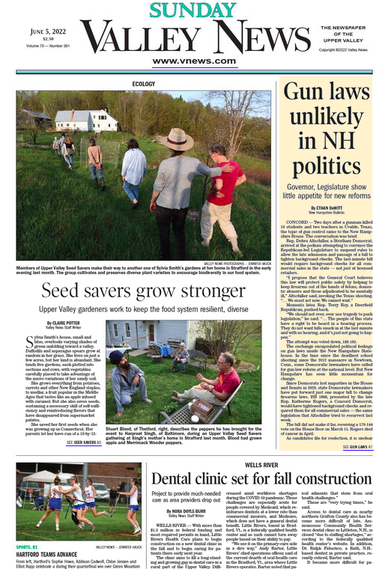 Obituary from the Valley News Obituary from the Valley News TUCSON, AZ — Frederick Elmer Webster, Jr. passed away on Tuesday, May 24th, 2022 in Tucson, Arizona with his wife Mary Alice and daughter Lisa by his side. Fred was born on October 22, 1937 in Auburn New York, the son of Fred and Evelyn Webster. Fred grew up in Auburn, New York and met Mary Alice while attending Auburn High School. They were married for 66 years. Fred was a scholar, teacher, father, and husband with a deep devotion to family, community and service. He was a class of 1959 graduate of Dartmouth College establishing lifelong friendships with many of his classmates. He continued his education earning an MBA from the Tuck School of Business at Dartmouth in 1960 and a PhD from Stanford University in 1964. By the time he completed his work at Stanford, he and Mary Alice had three children; Lynn, Mark and Lisa. Fred moved his young family to Tenafly, New Jersey for a brief time to explore the business world in New York City. He quickly discovered that the commuting life was not for him, and moved the family to Hanover, NH in 1965, where he began his career with the Tuck School. They moved to Etna, NH in 1968 and lived in an idyllic setting on 200 acres of land. Fred and Mary Alice and the kids had a small farm on the property with sheep, chickens, a few rabbits, cats and dogs. When he was not at the Tuck School or at the fire department, he was out in the fields on his tractor. He loved working the land and still found ways to work outside in the desert heat of Tucson. He was a disciplined scholar and teacher. A professor of management, his area of expertise was marketing. He had a strong reputation in the field and was a pioneer in the areas he studied, making significant and enduring contributions. Service to his community was deeply important to Fred. He served on many local and national boards. And everyone knew the importance of his commitment as a volunteer firefighter with the Etna Fire Department for over 20 years. His Tuck colleagues recall one day when a small fire erupted in Byrne Hall, he was the first on the scene and ready to go. He had spotted the smoke from afar, exclaimed to colleagues, “Well, that isn’t right!” and quickly dashed off to gear up. He also joined the Southport Fire Department in Southport, Maine where he and his wife would spend summers. Upon retiring to Tucson Arizona, he served as a volunteer with the Sherriff’s Auxiliary. Fred loved cars. He drove several different models of Mercedes - all with the recognizable FEW plates. On his 50th birthday, Mary Alice surprised him with a 1937 Ford Woody. He spent many happy hours driving around town and to car shows. A lifelong educator and learner, Fred continued to find ways to teach and research when he retired to Tucson. He was a visiting scholar and lecturer at the Eller College of Business at the University of Arizona, and he remained engaged with Tuck’s executive-education programs and marketing faculty colleagues. He is survived by his wife, Mary Alice; daughters, Lisa Webster of Tucson, AZ; Lynn Webster Brink and her husband Russell of Sun City, AZ; daughter- in-law Annie Dean and husband Doug Jones of Falmouth, Mass; grandchildren, Bene Webster of New York City, Henry Jones of Boulder, CO, Maddie Webster of Tucson AZ, Nick Lane and wife Heather of Anthem, AZ, Kelly Lane of Phoenix, AZ; and great grandchildren Riordan, Declan, Damon, Madi and Maxine. Fred is preceded in death by his son, Mark. The family would like to thank Traditions Hospice of Tucson for their compassionate care in Fred’s final 24 hours that allowed him to be home. A memorial service will be held at Saint Alban’s Church in Tucson on Tuesday, July 26 at 10am. If you would like to make a gift in Fred’s memory, please consider Saint Alban’s Episcopal Church, 3738 N. Old Sabino Canyon Road, Tucson, AZ 85750 or the Tuck School of Business at Dartmouth College, 100 Tuck Hall, Hanover, NH 03755-9000.
0 Comments
 April Fool’s Day is a goofy holiday for most people. But my Mom loved April Fool’s Day so much, she’d plan ahead for it.
At dinner that night, she’d love to tell us about who laughed hardest at her April Fool’s joke that day. The people she mentioned weren't always the the funniest or most gregarious people in the office; they were often the quietest. What came to be oddly predictable was that the same people who laughed the most were also the ones she felt friendlier toward, and they were the ones she seemed to repeatedly bring up in other conversations on the other 364 days of the year. One of the best quotes about friendship is also one of the best quotes about laughter: “We choose our friends not because they make us laugh but because we make them laugh.” The most fun person to be around isn’t the funniest person in the room, but it’s the person who believes you are the funniest person in the room. It seems less cool to laugh than it used to be. In social media, LOL stands for Laugh Out Loud (I’m hip to these acronym things, just like I know WTF stands for Way Too Funny). What I often see happen – especially with my daughters’ friends – is that instead of laughing during a conversation, someone who's not even smiling will actually say “LOL." It’s weird. It’s sort of like having someone compliment you on your sweater or haircut without looking at it. It' robotic. On April’s Fools Day my wife and I were having lunch at Panera. At the table next to us, a senior manager was meeting with three employees who worked remotely for the company. He clearly knew all of them, but not very well. They were all earnest, and they asked good questions and seemed prepared. But one of them stood out -- even to me at 10 feet away -- because she genuinely chuckled and laughed very easily. Not leg-slapping guffaws, but just happy chuckles at what either the manager said, or what the others said, or what she said. As their meeting progressed, more and more of the manager’s general comments and advice came to be directed to this woman instead of 1/3, 1/3, 1/3 to each of them. I don’t know if she was the most productive, smartest, interesting of the three employees, but she was the one who stood out. Who do you like most in your groups -- who makes it most worth sticking around? Over the years I’ve played saxophone in several rock bands, and my favorite people in those bands weren’t the greatest musicians – they were the ones who laughed the most during rehearsals or shows. I’m in a men’s group, and the two or three guys who make it most compelling to return to each week aren’t the ones who are necessarily the most insightful or most successful, they are the ones who laugh the easiest. My favorite colleagues, students, and post-docs have also been the ones who laughed the most. My Mom’s genetics speaking. I don’t know if that chuckling Panera woman was the best of those three employees, or if the people who laughed at my Mom’s goofy April Fools jokes were the best in the office. They are, however, the ones who are the most memorable. Sometimes people say, “To find a friend you need to close one eye. To keep them you must close both.” If your eyes are closed, you’ll still be able to find them if they are laughing. Happy April 2nd.  |
Welcome!Here are some tips, tricks, and secrets on how you and your family can eat to be healthier and happier. They're based on over 30 years of our published research.
Fun Interviews

Russian "Slim by Design"
Music & Mindless Eating
Most Visited Last Month• For You
• Smarter Lunchrooms • The X'Plozionz Band • Help your family • Kitchen Scorecard • Retracted papers • Grocery secrets • Do kids inherit taste? • Be healthier at work • How not to retire • Estimating calories • Restaurant Secrets • Syllabus template 
Top 2024 Downloads• Kitchen Makeover
• Smarter Lunchrooms • Smarter Lunchroom Scorecard • Grocery Shopping Hacks • Restaurant Secrets • Write a Useful Syllabus • Workplace Wellness Tips • Healthy Profitable Menus Categories
All
|
 RSS Feed