|
Some people love graduate school, but most of us want to finish it up and get started with our real lives.
About a couple years ago I met a nice guy from Utah who was finishing his thesis at a university about 5 hours away. He had just moved here to take a job. After only two weeks, he was totally immersed in his new job, and I asked him if he was concerned about being able to finish up his thesis. He said, "Oh, no, not at all. My university's only 5 hours away, and I've only got a couple months of work left on it." The idea of starting a new life or a new job a few months early – say, before we’ve completed our dissertation – sounds pretty good. After all, lots of people Zoom and Skype from home, so it should be a snap to web-commute back to the university and finish up our dissertation away from the anxieties of campus. For instance, you could now start your new gig (maybe as a professor) in June instead of August. Your plan would be to move, get settled, wrap up the dissertation, and get two months of a tempting new salary. When I was a PhD student, someone told me that if you want to know how long it will take to finish your dissertation if you move away, you use a simple formula. You take your best guess of how long you think it will take to finish, then you triple it and add three months. So if you think you have 2 months left on your dissertation, and you move away in June, you won’t be finished until following March – in 9 months instead of 2 months (2 months x 3 + 3 months = 9 months). This is a rough rule-of-thumb, that varies across schools, departments, and people. Still, when I heard this, I wasn’t going to take any chances. My apartment lease with my two roommates was up, so I spent the last two months crashing at the apartments of different friends so I could wrap it my dissertation and graduate before I move away to start my Asst Prof gig. What happens when you move is not only that it takes time to get resettled and you no longer have the support structure of your PhD program (and the “in sight & in mind” attention of your committee), but you also don’t feel the urgency to finish. You’re settling into a new role, and everybody's happy to have you around. You start to put off the uncomfortable pressure of you incomplete dissertation because it feels so much better to be treated as an an adult over here than as a sniffling child over there. But in a few months when your new department chair asks whether you’re through with your dissertation, it’s going to be awkward to answer. You might not have the option of completing a dissertation on campus, but if you can, it’s worth sleeping on couches until it’s done. ****************************************** The Rest of the Story: Four months after meeting the guy from Utah, I ran in to him again at the same boardgame cafe where we had originally met. He was very excited about having moved, and he was very excited about his new job. What's notable was that he never mentioned anything about his dissertation, how it was going, or whether it was finished. His dissertation had been an enthusiastic 80% of our conversation during the first time we met. Sine he never mentioned it, I wonder if he hadn't made the progress he had expected to make.
0 Comments
I just met a grieving young woman who had to put her 13-year-old dog to sleep 4 days earlier. She felt lonely and guilty. In the past 4 days I'm also sure at least one well-meaning person said, "Yo, get another one at the SCPA for $25." Probably didn't help. Pets magically enrich our lives. One example. Pheeny goes asleep on the corner of my desk every morning, wistfully watches me eat lunch, spastically rides along on errands, painfully endures me practicing the saxophone, and groggily waits for me on the foot of the bed. Every time I say something to her, she looks at me like, "Wow . . . that was the smartest thing I've ever heard." And that's why we cherish dogs. On the other hand, on most days she still goes to the bathroom under the piano. At least she didn't learn that from the kids. You know . . . $25 at the SCPA won't come close to replacing the hole in this poor woman's life and the hole in her heart. Our friends are vets and they say most people try to extend the life of a painfully dying dog much longer than they should. Dog-owners think they're doing it for the dog, but they do it more for themselves. They keep their dog jacked up on burning chemotherapy drugs, or they put them through horrible repeated surgeries so they don't have to feel the loneliness and guilt of letting their dog peacefully move on. In 2007 we lost a treasured cat who slept on the bed, slept on my desk, and purred whenever we looked at her -- total positive feedback for a cat owner. I was so smitten I took three daily allergy medicines so we could keep her. She ignobly died of kidney failure hiding in an unfinished basement furnace room when I was away at a conference one weekend. I still feel guilty and blue whenever someone mentions their wonderful cat connection. Or even whenever the city of that conference is mentioned. -------- Shortly after our front-yard memorial service for Kirby the cat, I ran across the cartoon below that tries to channel what one beloved pet is thinking on their last day with their beloved owner. It's touching -- in a good way. Even after rereading it 40+ times, I'm choked up and teary-eyed before I'm even half-way through it. I sent this cartoon to the woman I met Sunday. She replied that it had been a hard week, but this "made it a bit better." If you have ever lost a beloved pet that you still miss, maybe the thought expressed here will make it "a bit better." Successful people sometimes talk about their "Big Break." The moment that made the big difference in their life. What's rare, however, is hear about successful people who mainly have "Bad Breaks." Meet Charles Henry Turner. Many discoveries about how insects communicate with each other and how they think come from the crazy-creative shoe-string experiments and research papers of Turner. Born in 1967 -- right after the Civil War -- Turner was a standout zoology student at the University of Cincinnati and is thought to be the first African-American PhD graduate from the Univeristy of Chicago. Despite a strong start, he was never able to find a University professorship and instead taught high school biology in St. Louis until passing away at 56. Interestingly, there's not any record of him complaining about being overlooked, passed over, or not having a Big Break. He must have been too busy. For 30 years, he kept his passion, and he stayed the course of the mission he saw for himself. For these 30 years he continued to think to ask out-of-the-box research questions -- like, can insects hear? can they think? and how do they solve new problems? Then he'd design of ingenious experiments to test his ideas. He would then spend his nights collecting data, and he'd spend his weekends writing and publishing scientific papers in some of the best journals in his field. Still, no university every hired him. No big break, mainly bad breaks. Still he didn't complain, he kept working, and he kept his "eyes on the prize." That seems to be his super power and why 100 years later he stands so tall above all of those who were hired instead of him. There's an inspiring article on him in the Feb 2024 American Scientist.
We have discovered more than 100 changes that lunchrooms can make to nudge students to eat better. For instance, if you show a kid three consecutive pans of vegetables--green beans, corn, and carrots--they’ll take 11 percent more of whatever vegetable is in the first pan. It doesn’t matter what it is. They’re hungry, and what’s first looks best. To help schools visualize how they could go through their lunchrooms and make a bunch of low-cost/no cost changes, I wrote an infographic editorial for the New York Times.[i] One teacher said she even printed this out for her students and had them color it in class. High school math class just isn’t what it used to be. Shortly after the op-ed was published, a television producer wanted to film us doing a before-and-after Smarter Lunchroom Makeover of a middle school. Why a middle school? Apparently elementary students act too random in front of TV cameras (remember that picnic for squirrels?), and most high schoolers aren’t photogenic enough for television--too many strange clothes, weird hair colors, piercings, and uninterested looks. The TV people wanted us to find a middle school that would do a total lunchroom makeover for less than $50--and film it all MTV-style.[ii] After finding the perfect middle school and watching students eat lunches for a week, we isolated ten changes we could easily make for less than $50 total that would probably help them eat better without even realizing it--things like changing the location of the fruit, giving fun names to healthy foods, moving the cookies behind the counter, putting the vegetables first, and so on. The food service director and producer were cool with the changes, so we got to work.[iii]Twenty-five kids were hand-picked to be secretly filmed by three hidden cameras. We hid cameras in a ceiling tile, a hat, and even in our fake water bottle. Everything was set--and then came the catch. We were asked, with the cameras rolling, to predict the sales for each food item. After lunch was over, the smoke cleared, and the dishes washed, we were able to calculate just what had happened. The makeover was a nutritional victory--kids took a lot more salads, fruit sales doubled, white milk sales went up 38 percent, sugary drinks sales dropped by 17 percent, and they ran out of the healthy bean burritos--renamed Big Bad Bean Burritos--for the first time ever. These kids ate an average of 18 percent fewer calories, and they ate better than they typically did.[iv] What didn’t work was putting the cookies behind the counter. We thought this would decrease sales by 30 percent, but it did nothing. Even worse, we predicted that moving vegetables to the front of the line would increase sales by 11 percent, but it instead dropped by 30 percent.[v]What happened? A little bit of sleuthing showed that cookies were the cafeteria’s big “destination food.” They were five inches of hot, freshly baked gooey goodness--the main reason some kids ate school lunch. Wild horses couldn’t have pulled these kids away from the cookies without pulling them away from eating lunch there altogether. The vegetables were a different story. As I mentioned, our lab studies showed that lunchgoers were 11 percent more likely to take whatever vegetable they saw first compared to whatever they saw third. Well, that’s true when three vegetables are in the middleof the serving line, but here we put them in the frontof the line. Nobody scoops up a plate of green beans and then looks for the entrée that goes with it. People pick out the entrée and thenthe vegetable. They didn’t want to take a veggie until they knew what they were having for a main course. When the interview got to this point, the producer asked, “You’ve been doing eating research for twenty-five years. Sales didn’t increase by 11 percent, they dropped by 30. Why were you so far off?” I said, “Well, if we always knew what we were doing, we wouldn’t call it research.” (He seemed amused enough by this answer to not report these missed predictions in his story.) Still, nailing five out of seven predictions was pretty decent. Our prediction report card wasn’t straight As, but it was better than the report cards I got in high school. Most important, we were able to show in real-TV-time how only $38 and two hours of tweaking made a bigger difference than hefty expert commission reports. Where should a school start? Start with the Smarter Lunchroom Movement Checklist below and choose three easy changes to get the ball rolling. When we sit down with the food service directors and managers, we specifically tell them what they’re doing exceptionally well. We then mention that these are some other ideas they can consider, but we ask them to pick no more than three. Some schools want to try everything, but while ambition may soar in the heat of the moment, when it comes to implementation, making more than three changes can seem so overwhelming that often nothing gets changed. Focus on three and save the rest for later.
The Smarter Lunchroom Starter List When we do Smarter Lunchroom makeovers, it’s easy to find ten or more easy changes a lunchroom can make overnight or over a weekend for less than $50. Yet for most, even making a couple small changes can have a dramatic impact. Here are easy changes we’ve designed to get you started: To Increase Fruit Sales . . . []Display fruit in two locations, one near the register []Display whole fruits in a nice bowl or basket []Employ signs and suggestive selling to draw attention to the fruit To Increase Vegetable Sales . . . []Give them creative/descriptive names[vi] []Display the names on menu boards and at point-of-purchase To increase White Milk Sales . . . [] Place white milk first in the cooler [] Place white milk in every cooler [] Make sure fat-free (skim) white milk accounts for at least 1/3 of all milk displayed To Increase Healthy Entrée Sales . . . [] Make the healthy entrée the first or most prominent in the lunch line. [] Give the targeted entrée a creative or descriptive name [] Feature it on a menu board outside the cafeteria To Increase the Number of Complete Healthy Meals Sold . . . [] Place key meal items at the snack window2 [] Move chips and cookies behind the serving counter and offer them by request only [] Create a healthy-items-only “grab and go” convenience line[vii] Here’s some of what they mentioned:
1. Use lighter plates 2. Use smaller plates 3. Cut your food into pieces 4. Don’t watch TV when you eat 5. No scary movies 6. Don’t shop when you’re hungry (you don't buy more, you buy worse) 7. Deprivation always backfires Some of these might sound pretty basic, but it’s Aner's description of how they work and Quartz's funny illustrations that really make them pop. Aner flew out to visit me from Israel a while back, and we were talking about how people react after they hear about some of these discoveries. Some people hear about suggestions like these and say to themselves “That would never happen to me,” so they don’t try to do anything different, and nothing changes in their life. Other people say to themselves, “Yeah, that makes sense” but they never do it, so, again, nothing changes in their life. No one is going to hear about 7 discoveries and make 7 changes in their life. It’s too much. But you can make 1 or 2 of them. After they become habits, you can always come back to the table for another course. We're all raised, socialized, and helped by other people.
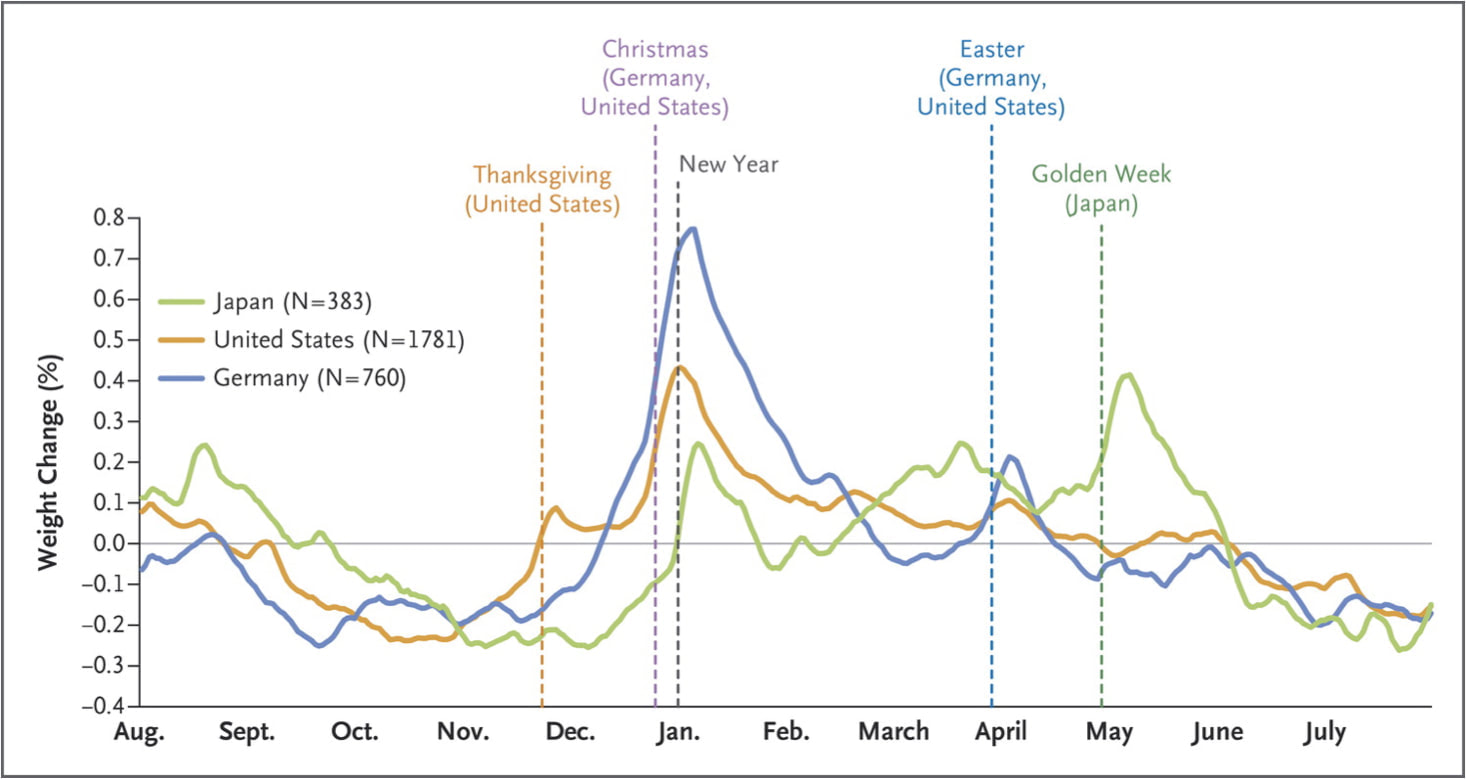
Some of these people are obvious: parents, close relatives, coaches, and some teachers. But a lot of others aren’t nearly so obvious. They might be that person who recommended we go to one school versus another, helped get us a job, helped lend a hand during a difficult time, or saved us from a desert island that one time by paddling through shark infested waters using only his right arm. With Thanksgiving this month, it can be a nice chance to hit pause and think of 2-3 nonobvious people who might have done a small thing that made a big difference in our life. Doing something as simple as this can do your soul good. On one extreme, it reminds us that we aren’t the self-centered Master of our Universe as we might think when things are going great. On the other extreme, it reminds us that there are a lot of people silently cheering for us when we might think things aren’t going so great. What do you suppose would happen if you tracked these people down and game them a call? It’s four steps: 1. Find their phone number and dial. 2. “Hey, I’m ___; remember me? How are you?” 3. “It’s Thanksgiving. I was thinking of you.” 4. “Thanks” For about the past 30 years, I’ve tried to do this each Thanksgiving. It used to be the same 3-4 people (advisors and a post-college mentor), then a couple more, and this year I’m adding a new one. For some reason, I always look for an excuse why I shouldn’t make these calls. I always find myself pacing around before I make the first call. Part of me thinks I might be bore them, or they already know it, or it’s interrupting them, or that it’s too corny. Yet even if I have to leave voice messages, I’m always end up smiling when I get off the phone. I feel more thankful and centered. Maybe they feel differently too. Still, there’s some years I never made any calls, because I had good excuses. Maybe it was too late in the day, or they were probably with their family, or I called them last year, or I didn’t really have enough time to talk. I’m sure they had some good excuses – way back when – as to why they didn’t have time for me. I’m thankful they didn’t use them. If you can think of 2-3 people you’re thankful for who might not know it, you don’t have to wait until Thanksgiving next year to tell them. They won’t care that you’re a little bit late or a whole lot early. It’s only 4 steps. |
Welcome!Here are some tips and tricks on how you and your family can eat to be healthier and happier. They're based on 35+ years of our published research.
Fun InterviewsTop Downloads• Kitchen Makeover
• Smarter Lunchrooms • Smarter Lunchroom Scorecard • Grocery Shopping Hacks • Restaurant Secrets • Write a Useful Syllabus • Workplace Wellness Tips • Healthy Profitable Menus Most Visited Pages• For You
• Smarter Lunchrooms • Play it Forward • The X'Plozionz Band • Help your family • Kitchen Scorecard • Retracted papers • Grocery secrets • Do kids inherit taste? • Be healthier at work • How not to retire • Estimating calories • Restaurant Secrets • Syllabus template Categories

All
Archives
April 2026
|
||||||